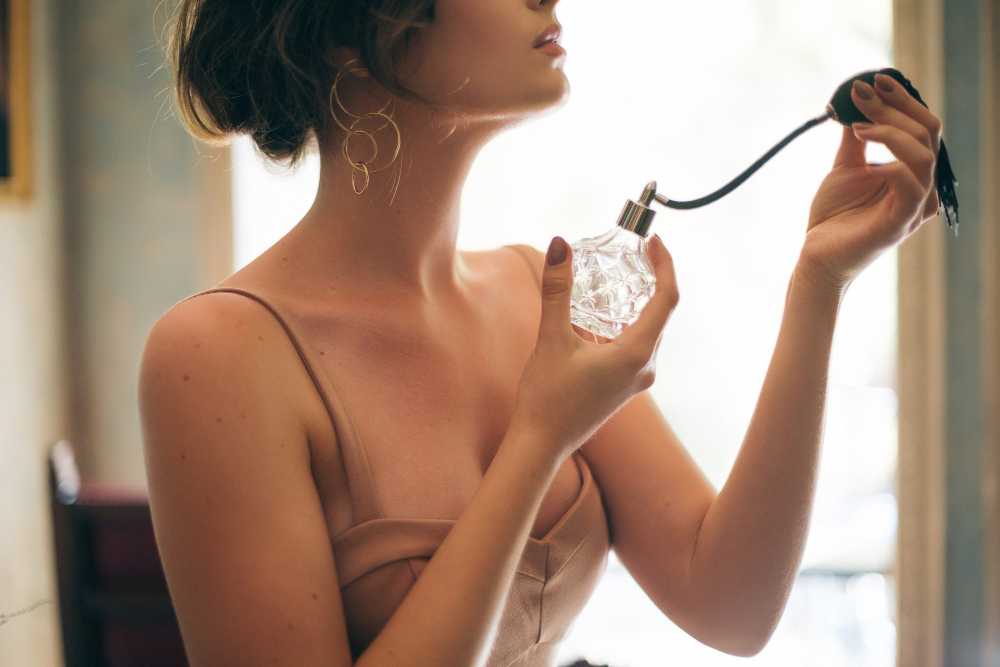
You spray on the same perfume your friend wears, and somehow it smells nothing like it does on them. This experience frustrates countless fragrance shoppers who fall in love with a scent on someone else only to discover it becomes something unrecognizable on their own skin. The phenomenon is real, and it comes down to chemistry.
Every person has a skin chemistry as individual as their fingerprint. When fragrance meets skin, a reaction occurs. The perfume does not just sit on top of you. It interacts with your body’s natural processes, and the result can vary dramatically from person to person.
The pH Factor
Your skin has a pH level, a measure of how acidic or alkaline it is. This pH varies from person to person and even across different parts of your own body. Some people have naturally more acidic skin, while others trend toward alkaline. This baseline chemistry affects how fragrance molecules behave once they land on your skin.
Acidic skin tends to amplify certain notes while diminishing others. Fragrances with citrus top notes might seem stronger on acidic skin. Base notes like vanilla or musk might fade faster or take on a sharper edge. The opposite can occur on alkaline skin, where those same base notes might bloom while top notes disappear more quickly.
Temperature & Blood Flow
Skin temperature plays a significant role in fragrance development. Warmer skin causes fragrance molecules to evaporate faster, which increases projection but can shorten longevity. Cooler skin holds onto those molecules longer, creating a closer wear that might last further into the day.
Blood flow to the skin also matters. Areas with more circulation, like your wrists and neck, tend to project fragrance more actively. People with naturally higher skin temperatures or more active circulation might find that fragrances evolve faster on them. The perfume that takes two hours to reach its heart notes on one person might get there in thirty minutes on another.
The Microbiome Effect
Your skin hosts billions of microorganisms. This microbiome is as individual as a fingerprint, populated by bacteria, fungi, and other tiny life forms that have evolved to live on your particular body. These organisms produce their own metabolic byproducts, creating the baseline scent that we recognize as a person’s natural smell.
When perfume lands on skin, it mingles with these microbiome outputs. The interaction can amplify certain notes, suppress others, or create entirely new olfactory impressions that were not part of the original formulation. Two people with different microbiome compositions will smell different wearing the exact same fragrance.
Sebum & Skin Oil
Your skin produces oils constantly. These oils help protect your skin and keep it hydrated, but they also interact with fragrance in meaningful ways. People with oilier skin often find that fragrances last longer on them because the oils help hold the scent molecules in place. Drier skin can cause fragrances to evaporate more quickly.
The composition of your skin oil matters too. Not all sebum is created equal. Genetics, diet, and overall health influence what your skin produces. Some people’s natural oils harmonize with certain fragrance types while clashing with others. A perfume that sings on oily skin might fall flat on dry skin, or vice versa.
Diet & Lifestyle
What you eat and drink affects your body chemistry, which in turn affects how fragrance smells on you. Spicy foods, garlic, and alcohol can all influence your skin’s output. Heavy caffeine consumption can raise skin temperature. Medications alter body chemistry in ways that might impact fragrance interaction.
Smokers often find that fragrances smell different on them compared to non smokers. The chemicals absorbed through smoking alter skin chemistry in measurable ways. Even stress levels can play a role. Cortisol and other stress hormones change how your body functions, including your skin.
Hormonal Influences
Hormones play a significant role in skin chemistry. Women often notice that fragrances smell different at various points in their menstrual cycle. Pregnancy can dramatically alter how perfume interacts with skin. Menopause brings its own changes. These hormonal shifts affect pH, temperature, oil production, and the microbiome all at once.
Age related hormonal changes affect everyone. A fragrance that worked in your twenties might smell different in your forties or sixties. This is not just about changing preferences. Your skin has actually changed how it interacts with the same formulation.
Environmental Factors
Where you live and the climate you experience also impact fragrance development. Humidity affects evaporation rates. Dry desert air pulls moisture from skin and can make fragrances disappear faster. Hot climates increase projection but might shorten overall wear time. Cold weather keeps scent molecules closer to the skin.
Even altitude can play a role. Lower air pressure at higher elevations affects how quickly fragrance molecules evaporate. Someone living in Denver might experience a perfume differently than someone in Miami, even with identical skin chemistry.
Working With Your Chemistry
Knowing that perfumes interact with your body helps explain why sampling before buying matters so much. What smells amazing on a paper strip or on your friend might not work the same way on you. Testing a fragrance on your own skin and wearing it for several hours gives you an accurate picture of how it will actually perform.
Some people learn over time which fragrance families work best with their chemistry. Maybe musks bloom beautifully on your skin while citrus notes disappear instantly. Perhaps oriental fragrances project well on you but florals fall flat. This self knowledge saves money and frustration.
Moisturizing before applying fragrance can extend longevity, especially for those with drier skin. Applying to pulse points takes advantage of natural warmth. Some people find that spraying on clothing helps preserve a scent closer to its original formulation, though this works better with lighter fragrances than heavy oils.
The fact that fragrance interacts so personally with each wearer is not a flaw. It means that your perfume becomes something individual. The same bottle produces a slightly different result on every person who wears it. That is part of what makes fragrance such an intimate form of expression.